
Cornwall may look like one of the easiest places in the country to relax.
We have the sea, open countryside and plenty of places that appear wonderfully peaceful in photographs. None of that automatically guarantees a good night’s sleep.
The people I see in my Hayle practice have the same busy minds, responsibilities and worries as people living anywhere else. Cornwall also brings some pressures of its own, including seasonal work, long journeys, early starts and the financial uncertainty that can accompany living in an area so dependent on tourism.
Sleep difficulties rarely have one simple cause. Quite often, several ordinary things have gradually come together.
Work does not always follow a regular pattern
Many people in Cornwall work in hospitality, tourism, healthcare, care work, retail, farming and other jobs involving early starts, late finishes or changing shifts.
During the busier months, the working day may become longer just as the evenings become lighter. Seasonal workers can move between extremely busy periods and quieter months, making it difficult for the body and mind to settle into a consistent rhythm.
If you run your own business, the day may not end when you physically stop working. Messages, bookings, accounts and tomorrow’s jobs can follow you into the evening.
You may be tired when you reach bed while your mind still feels as though it is at work.
Long journeys can stretch the day
Cornwall is beautiful, but getting from one part of it to another can take time.
Some people travel considerable distances for work, appointments or family responsibilities. Summer traffic can make those journeys even longer and less predictable.
An early start may mean getting up long before you feel ready, while a delayed journey home leaves very little time to slow down before bed.
When the day has felt rushed from beginning to end, it is understandable that your mind may need time to catch up.
Summer light and seasonal noise
Cornwall’s long summer evenings are one of the pleasures of living here, but they can also make winding down more difficult.
Light continues entering the bedroom later in the evening and earlier in the morning. Depending on where you live, summer may also bring more traffic, visitors, holiday accommodation and general activity outside.
During winter, the opposite change can affect energy and routine. Dark mornings may make getting started feel more difficult, while long evenings indoors can lead to more screen time or dozing before bed.
You cannot control the seasons, but blackout curtains, ventilation and reducing avoidable noise may make the bedroom more comfortable.
A quiet place does not always create a quiet mind
You can live close to the coast or look out over open countryside and still lie awake thinking about money, work, relationships or tomorrow.
This is something people can feel guilty about. They think they should be relaxed because of where they live, which adds another layer of frustration when they are not.
Your surroundings may help, but they do not switch off responsibility or worry.
Sometimes the first quiet moment of the day is the moment you get into bed. With no conversation, work or television to occupy you, all the thoughts you postponed during the day suddenly have space to return.
Worrying about sleep can become part of the problem
After several difficult nights, bedtime can begin to feel like a test.
You wonder whether you will sleep, check the time and calculate how many hours remain before you need to get up. Each time you wake, you may immediately reach for the clock.
You know that trying to force sleep is not helping, but it is difficult to stop when the following day matters.
This doesn’t mean that sleep problems are imaginary or “all in your mind”. Physical health, medication, pain, hormones, shift work and the sleep environment may all be relevant.
It simply means that the pressure and habits that develop around sleep can become another part of the picture.
Phones keep the day close by
Phones allow work, news and other people to remain present right up until the moment we try to sleep.
You might answer one final message, check tomorrow’s weather or look at something on social media. Half an hour disappears, and your mind has received another collection of things to think about.
You do not need a perfect evening routine or a strict ban on every screen. A shorter and quieter transition into the night may be more realistic.
That could mean putting work messages aside, lowering the lighting or choosing something less stimulating for the final part of the evening.
Small changes are more useful when they genuinely fit your life.
What can help?
There is no single routine that suits everybody, but it may be worth considering:
- Whether your waking time changes considerably across the week
- How much caffeine you drink and how late you drink it
- Whether the bedroom is too light, warm or noisy
- How close to bedtime you are still working
- Whether you regularly check the time during the night
- Whether you spend long periods awake in bed worrying
- Whether alcohol is affecting the quality of your sleep
- Whether pain, medication or another health concern may be involved
Try to approach these as useful observations rather than another list of sleep rules you must follow perfectly.
When to speak to your GP
Speak to your GP if sleep difficulties have lasted for months, are affecting your ability to manage during the day or occur alongside another physical or mental-health concern.
Medical advice is particularly important if you:
- Snore loudly
- Gasp or choke during sleep
- Appear to stop breathing while asleep
- Experience severe daytime sleepiness
- Fall asleep unexpectedly
- Have persistent pain or low mood
- Notice a significant unexplained change in your sleep
Do not stop or change prescribed medication because of something you have read online. Speak to the clinician responsible for your care.
Where hypnotherapy may fit
Hypnotherapy can aid sleep and support relaxation.
In my Hayle practice, and during online appointments, I work with people who find that a busy mind, anxiety or the pressure surrounding bedtime has made settling more difficult.
A session may include guided relaxation, imagery and looking at some of the thoughts or habits that keep the day going long after you have gone to bed.
Everyone responds differently, and hypnotherapy cannot promise a particular amount or quality of sleep. Persistent or severe sleep problems should be medically assessed.
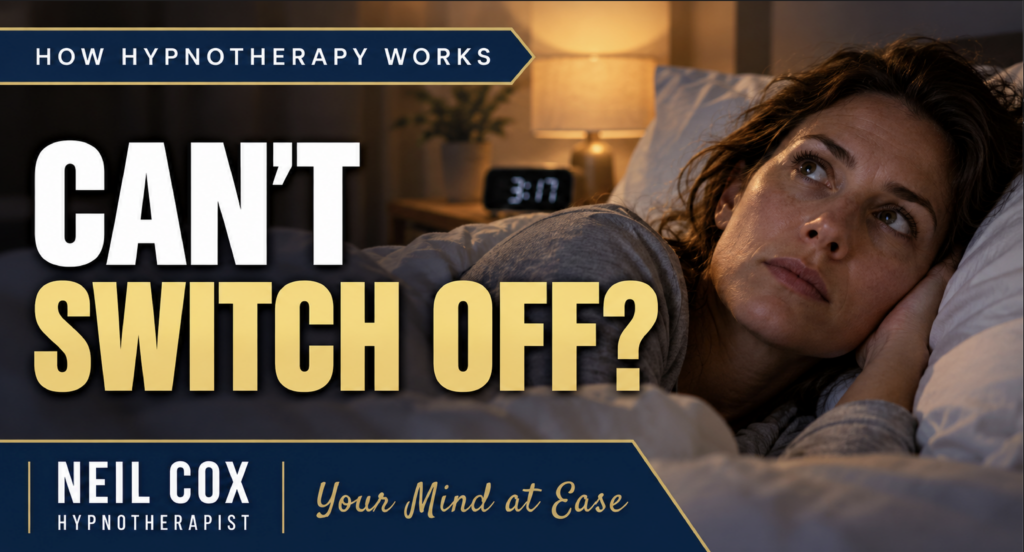
If you would like to experience my style before contacting me, you can watch my free YouTube video, Why Your Brain Won’t Switch Off at Night, or try one of my guided hypnosis sessions.
A calmer place to begin
Living in Cornwall does not make anybody immune to stress or poor sleep.
If anything, the contrast between peaceful surroundings and a mind that refuses to settle can make the experience even more frustrating.
You do not need to overhaul your entire life or create a perfect bedtime routine. Begin by noticing what keeps your own day going and what might help it come to a gentler end.
If sleep has become something you dread or spend too much time thinking about, you are welcome to contact me for a friendly conversation about how I may be able to help.
Leave a Reply