Author: Neil

  • The Real Reasons So Many People in Cornwall Struggle With Sleep

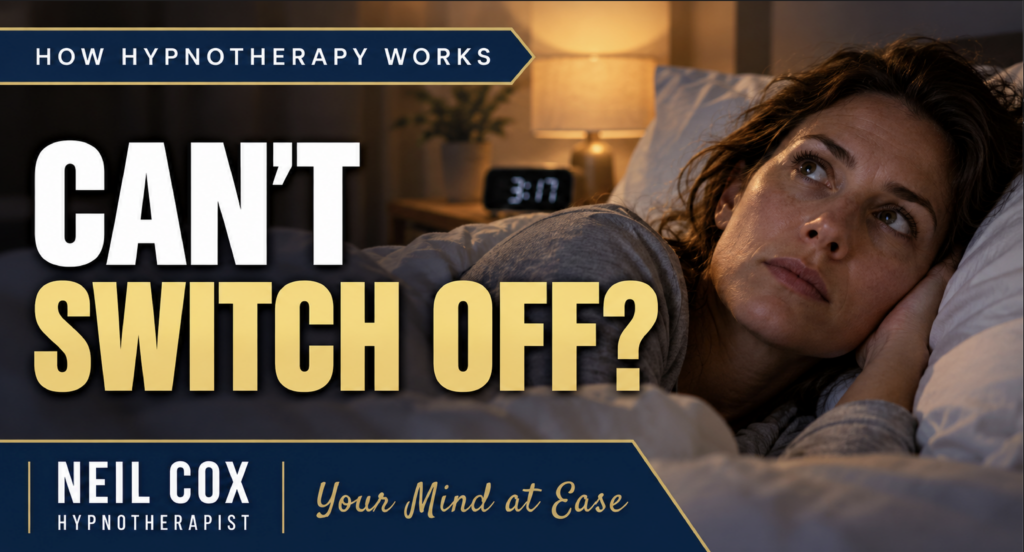
    The Real Reasons So Many People in Cornwall Struggle With Sleep

    Sleep problems are often treated as something quite personal — like it’s just down to stress, overthinking, or not having a good bedtime routine.

    But when you look at what’s happening more broadly across Cornwall, there’s often a bigger picture sitting underneath it all.

    Things like financial pressure, housing challenges in some areas, seasonal work patterns, and general life uncertainty can all create a background level of stress that the brain doesn’t always fully switch off from at night. Even if you’re not consciously thinking about these things, the nervous system can still be carrying that load into the evening.

    And that’s where sleep tends to get affected. The brain is responding exactly as it’s designed to do in a busy, sometimes unpredictable environment.

    What’s interesting is that once sleep starts to become difficult, the problem often shifts away from external pressures and becomes more about what’s happening internally — how the mind and body are processing that ongoing sense of alertness.

    That’s what this article is really about.


    1. A Busy Mind That Never Fully Switches Off

    One of the most common reasons for poor sleep is mental overactivity.

    During the day, your brain is constantly processing information, making decisions, reacting to demands, and managing stress. If life feels busy or pressured, the brain can remain in a heightened state of alertness well into the evening.

    This is often described as “a mind that won’t shut off”.

    People may notice:

    • Replaying conversations from the day
    • Planning tomorrow in bed
    • Worrying about small things that feel bigger at night
    • A sense of mental restlessness when trying to relax

    Across Cornwall, this is particularly common in people balancing work, family life, and long commutes between towns such as Truro, Penzance, and Falmouth.

    When the brain is used to being “switched on” all day, it doesn’t simply turn off because the lights go out.


    2. The Stress System Stays Activated

    Sleep and stress are closely linked.

    When the brain perceives pressure, it activates the fight-or-flight system. This is useful in short bursts, but when it becomes chronic, it can interfere with sleep.

    In this state, the brain prioritises alertness over rest.

    This can lead to:

    • Light, broken sleep
    • Waking during the night
    • Early morning waking
    • Difficulty falling asleep even when tired

    Many people in Cornwall describe feeling like they are “tired but wired”.

    This is not a failure of discipline. It is a nervous system pattern that has become stuck in a protective mode.

    Whether someone lives in busy coastal towns like St Ives or quieter rural areas, modern stressors still follow them home.


    3. The Sleep Pressure Cycle

    One of the most frustrating sleep patterns is what happens when people start worrying about sleep itself.

    It often begins like this:

    A few nights of poor sleep → concern builds → effort increases → sleep becomes more difficult → more concern develops.

    This creates a cycle where the bed becomes associated with pressure rather than rest.

    Common thoughts include:

    • “I need to get to sleep now”
    • “If I don’t sleep, tomorrow will be awful”
    • “Why can’t I just switch off like normal people?”

    The problem is that sleep is not something you can force.

    The more effort applied, the more alert the brain tends to become.


    4. Modern Life Has Changed Sleep Patterns

    Sleep problems are not new, but they are more common now due to modern lifestyle factors.

    These include:

    • Increased screen time in the evening
    • Constant access to news and social media
    • Irregular routines
    • Reduced natural daylight exposure
    • High cognitive load from work and information

    Even in a beautiful environment like Cornwall, modern digital life follows people everywhere.

    Whether you are in Helston or commuting through Camborne, the brain rarely gets true downtime.

    This constant stimulation can make it harder for the brain to naturally downshift into sleep.


    5. The Brain Learns Sleep Associations

    The brain is constantly learning through repetition.

    If someone spends many nights:

    • Lying awake in bed
    • Checking the clock
    • Worrying about not sleeping

    …the brain can begin to associate the bed with alertness rather than sleep.

    This is not permanent, but it can become a strong pattern.

    The good news is that the brain can also unlearn this association when new patterns are introduced.


    6. Emotional Load and Unprocessed Stress

    Sleep is often where emotional processing happens.

    When emotional load is high, sleep can become lighter or more disrupted.

    This might come from:

    • Work stress
    • Relationship difficulties
    • Health concerns
    • Financial pressure
    • Life changes or uncertainty

    Even if these things are not consciously being thought about, the brain may still be processing them in the background.

    Many people in Cornwall describe feeling “fine during the day” but struggling when everything goes quiet at night.


    7. The Misunderstanding About “Trying Harder”

    One of the most important points about sleep is this:

    Trying harder to sleep usually has the opposite effect.

    People often respond to poor sleep by:

    • Going to bed earlier
    • Staying in bed longer
    • Reducing activity during the day
    • Focusing heavily on sleep hygiene rules

    While some of these can help, over-focusing on sleep can increase pressure, which keeps the brain more alert.

    Sleep works best when it is allowed to happen rather than forced.


    8. Why This Is So Common in Cornwall

    There is nothing unique about Cornwall that causes sleep problems directly.

    However, many people here experience a combination of:

    • Seasonal changes in daylight
    • Rural isolation in some areas
    • Tourism-related seasonal work patterns
    • Commuting between towns such as Newquay, Redruth, and surrounding areas
    • Busy summer periods followed by quieter winters

    These patterns can subtly influence routine, stress, and sleep consistency.

    When combined with general modern stress, sleep can become more fragile.


    9. The Positive Side: Sleep Is Changeable

    The most important thing to understand is this:

    Sleep is not fixed.

    Even long-term sleep problems can improve when the brain learns new patterns of safety, calm, and reduced pressure.

    When the stress system calms down, sleep often begins to restore itself naturally.

    This is why approaches that focus on reducing mental overactivity, rather than “forcing sleep”, tend to be more effective.


    Frequently Asked Questions

    Why do I feel more awake when I go to bed?

    Because your brain may associate bedtime with pressure, thinking, or frustration. This increases alertness instead of relaxation.


    Can overthinking really stop sleep?

    Yes. Overthinking increases cognitive arousal, which keeps the brain in a more active state that is not ideal for sleep onset.


    Why do I wake up at 3am or 4am?

    Early waking is often linked to stress hormone patterns, learned sleep cycles, or a brain that remains partially alert during the night.


    Is this a medical sleep disorder?

    Not always. Many sleep difficulties are behavioural and neurological patterns rather than medical conditions, though persistent issues should always be checked with a GP if needed.


    Why does sleep get worse when I try harder?

    Because effort increases alertness. Sleep is a natural process that happens when the brain is relaxed rather than controlled.


    Can hypnotherapy help with sleep?

    Many people find hypnotherapy helpful because it focuses on reducing mental overactivity and helping the brain return to a calmer baseline state.

    Final Thoughts


    If you are struggling with sleep in Cornwall, it is not unusual, and it is not something you are stuck with.

    Sleep difficulties are usually the result of understandable brain processes rather than a fault in you as a person.

    When those processes are understood and worked with, rather than fought against, change becomes far more possible.

    If you are finding that sleep has become a struggle, it may be less about trying harder – and more about helping your mind and body return to a state where sleep can happen naturally again.

  • HypnoCom 5 Review: Is This the Best Audio System for Hypnotherapists?

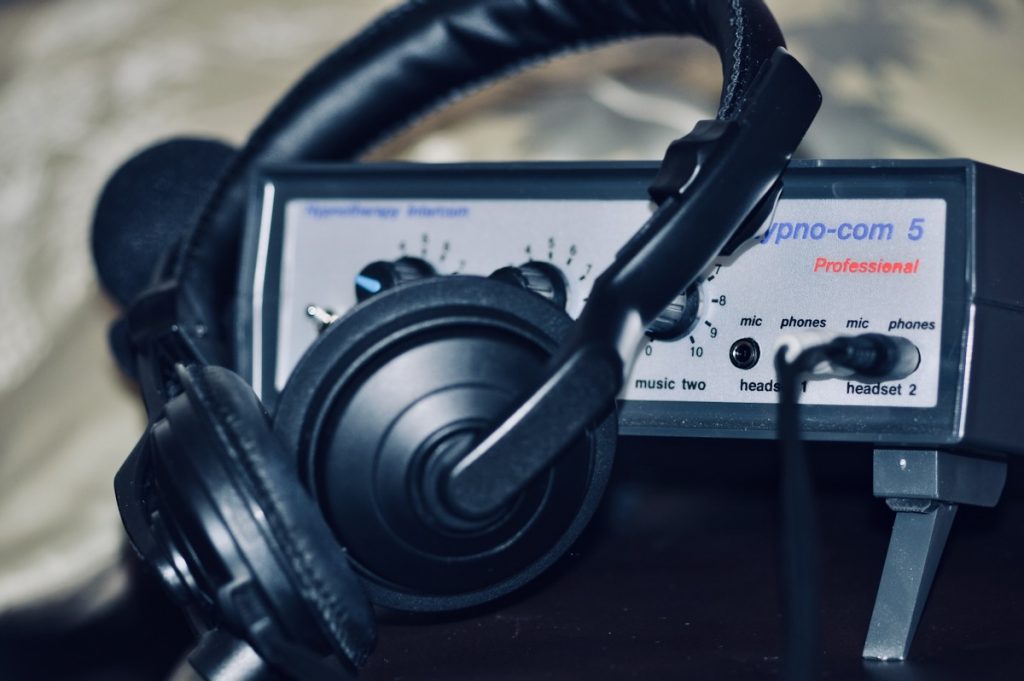
    HypnoCom 5 professional hypnotherapy communication system

    Since 2014 I’ve used the HypnoCom 5 in my hypnotherapy practice, and it remains one of the best investments I’ve made for creating a comfortable, immersive experience for clients.

    If you’re a hypnotherapist considering purchasing a HypnoCom system, or you’re a client wondering why some hypnotherapists use headphones during sessions, this review will give you an honest assessment based on years of real-world use.

    Update 2026

    Despite newer models now being available, including the HypnoCom 8, I continue to use my HypnoCom 5 regularly in clinical practice because it remains reliable, easy to use, and delivers excellent sound quality.

    Quick Verdict

    Overall Rating: 9/10

    Pros

    • Excellent sound quality
    • Helps reduce the impact of external distractions
    • Easy for clients to use
    • Particularly helpful for clients with mild hearing difficulties
    • Reliable and well-built
    • Allows sessions to feel more immersive

    Cons

    • More cables than modern wireless systems
    • Appearance is a little dated

    What Is the HypnoCom 5?

    The HypnoCom 5 is a professional communication system designed specifically for hypnotherapists and other talking therapists.

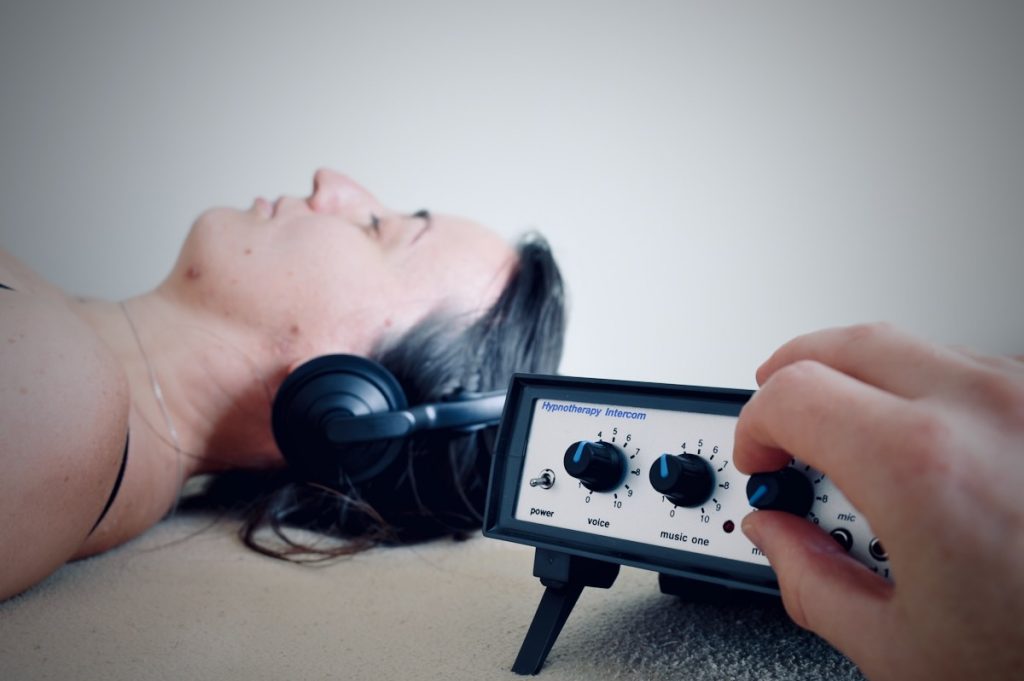
    The therapist wears a lightweight microphone / headphone headset while the client wears comfortable headphones. The therapist’s voice is transmitted directly to the client, creating clear communication throughout the session.

    Client headphones used with the HypnoCom 5

    Unlike a standard room speaker, the HypnoCom delivers the therapist’s voice directly to the client, helping maintain focus and reducing the impact of background noises.

    Why I Bought a HypnoCom 5

    When I first purchased the system back in 2014, my practice room was occasionally affected by external noise. Builders, traffic and general day-to-day sounds could sometimes interrupt what should be a calm and relaxing experience. Although hypnosis can work perfectly well without specialist equipment, I wanted to provide the best possible environment for my clients.

    After researching the available options, I decided to invest in the HypnoCom 5. Years later, I can confidently say it was money well spent.

    My Experience After Years of Use

    Since purchasing the HypnoCom 5, I have used it with hundreds of hypnotherapy clients covering a wide range of issues, including anxiety, sleep problems, confidence, smoking cessation and stress management.

    The most common feedback I receive is that my voice sounds clearer, closer and easier to focus on. Many clients report that after a few minutes they completely forget they are wearing the headphones and simply become absorbed in the experience.

    One unexpected benefit is that the system can help clients who are concerned about being distracted. Knowing they can hear every word clearly often allows them to relax more quickly.

    Benefits for Clients

    Reduced Distractions

    No therapy room is completely silent.

    Whether it’s traffic outside, people walking past or the occasional Cornish seagull deciding to make its presence known, life continues around us. The HypnoCom helps minimise the impact of these sounds by delivering my voice directly to the client.

    Improved Clarity

    Clients hear every word clearly without needing to strain or concentrate. This allows them to focus on the session rather than worrying about missing something important.

    Helpful for Mild Hearing Difficulties

    Some clients have minor hearing difficulties but may not wear hearing aids or require specialist support. The ability to adjust the volume independently can make sessions significantly more comfortable.

    A More Immersive Experience

    Many people describe the experience as feeling more personal and engaging. The voice feels closer and more immediate, which can help deepen relaxation and concentration.

    Neil Cox using the HypnoCom 5 communication system during a hypnotherapy session

    Is the HypnoCom Necessary?

    No.

    Excellent hypnotherapy can be delivered without a HypnoCom system. The skill and experience of the therapist will always be more important than the equipment being used. However, I believe the HypnoCom enhances the overall experience for many clients and provides an additional layer of comfort and professionalism.

    It’s one of those pieces of equipment that you don’t realise you appreciate until you’ve experienced it.

    Reliability and Build Quality

    One of the reasons I continue to use the HypnoCom 5 is its reliability. Despite years of regular use, the system has proven remarkably dependable. Like any equipment, occasional maintenance is required, but overall it has stood the test of time exceptionally well.

    Why I Continue to Use the HypnoCom 5

    There are now newer technologies available, including wireless systems and smartphone-based alternatives. Despite this, I continue to use the HypnoCom because it simply works. The sound quality is excellent, the system is reliable, and clients consistently respond positively to the experience. For me, it’s become a valuable part of creating a calm, focused and professional therapeutic environment.

    What Does This Mean for My Clients?

    At my practice in Hayle, Cornwall, I still use the HypnoCom 5 as part of my commitment to providing the best possible experience for clients. The system helps ensure that clients can hear every word clearly while reducing the impact of external distractions. Although the equipment itself isn’t what creates change, it helps create the conditions in which clients can relax, focus and engage fully with the process.

    What About the HypnoCom 8?

    Since purchasing my HypnoCom 5, the manufacturer has released newer models, currently the HypnoCom 8 model. The latest version retains the same core philosophy of providing clear communication between therapist and client while incorporating updated electronics and additional features.

    Although I haven’t used the HypnoCom 8 to provide a full review, my experience with the HypnoCom 5 has been overwhelmingly positive, which gives me confidence in the ongoing development of the range.

    If you’re considering purchasing a new system today, it’s worth exploring the current HypnoCom 8 model alongside any available second-hand HypnoCom 5 units.

    Final Verdict

    After years of professional use, I still consider the HypnoCom 5 from Hypnoquip one of the best investments I’ve made for my practice.

    It’s reliable, effective and consistently appreciated by clients.

    If you’re a hypnotherapist considering whether to purchase one, my answer would be simple:

    If you value clarity, professionalism and creating an immersive experience for your clients, the HypnoCom 5 is well worth considering.

    Rating: 9/10

  • What Is a Shakti Mat and Why Does Everyone Talk About It?

    What Is a Shakti Mat and Why Does Everyone Talk About It?

    It’s not often I come across a wellbeing tool that makes me laugh, wince, breathe deeply, and ultimately feel better — but the Shakti Mat has done all that and more.

    As a hypnotherapist, I’m naturally interested in tools that engage both the body and the mind — and the Shakti Mat, with its sharp little spikes and deceptively simple design, is one of those rare tools that does exactly that. It’s become a regular part of my personal wellbeing routine.

    Let me show you how it works, why it works, and how it complements what I already do in my practice.

    The Shakti Mat

    The Shakti Mat is an acupressure mat — a fabric mat embedded with thousands of tiny spikes arranged in circular clusters. Inspired by traditional Indian bed-of-nails practices, it’s designed to stimulate pressure points across the body, helping to:

    • Relieve tension and pain
    • Improve circulation
    • Encourage relaxation
    • Release endorphins

    Yes, it looks a bit intimidating. And yes — it can feel intense at first. But that’s all part of its magic.

    My First Experience — The Shakti Mat Challenge

    I’ll be honest — my first experience with the Shakti Mat was a bit… dramatic. It’s not exactly like lying on a fluffy rug. But that’s the point. It’s meant to stimulate, challenge, and awaken your body — and in my case, it really did.

    Here’s a quick Short I made when I first tried standing on it. Let’s call it the Shakti Mat Challenge:

    Yes, it stings a bit. But after the initial shock — and some less dramatic sessions lying down — I noticed deeper breathing, muscle relaxation, and an almost meditative calm. Now it’s part of my routine for winding down and for those moments when I need a reset. The intensity is what makes it effective.

    How It Works on the Body (and Brain)

    The spikes create controlled, shallow pressure on the skin, which your body interprets as a mild, manageable stressor. In response:

    • Your brain releases endorphins (natural feel-good chemicals)
    • Blood flow increases to the stimulated areas
    • The parasympathetic nervous system is activated — this is your body’s natural rest-and-digest state

    In other words, you get a natural high, a sense of calm, and a physiological signal that says: You’re safe now.

    If you’ve ever had a massage that hurt just the right amount — that’s the zone the Shakti Mat sits in.

    The Shakti Torus Rings: Another Favourite in My Toolkit

    In addition to the mat, I’ve recently started using the new Shakti Torus Rings — and they’re another surprisingly powerful tool. They’re small, portable, and designed for use on your fingers. The stimulation is subtle but focused, and I’ve found it brilliant for calming the nervous system and improving focus, especially during screen-heavy days.

    Here’s a quick YouTube Short I made to show you how they work:

    Like the Shakti Mat, the Torus Rings help you reset — especially if you struggle with overthinking or sensory overload. They’re great fidget-friendly stress relievers that don’t look or feel like a gimmick.

    Whether I’m using the mat to wind down or the Torus Rings to focus between clients, these small rituals make a big difference. They complement the effects of hypnotherapy beautifully — calming the mind, grounding the body, and helping you reconnect with your breath and self-awareness.

    The Link to Hypnotherapy

    Hypnotherapy works by helping the mind shift into a focused, receptive state — often tapping into the parasympathetic nervous system. That’s the same system the Shakti Mat engages.

    By using both together, you create a loop of reinforcement:

    • The Shakti Mat helps drop you into a calm, aware state
    • Hypnotherapy deepens and harnesses that state for personal change
    • The Torus Rings add a sensory grounding tool for during or after sessions

    They’re not substitutes — but they’re brilliant companions.

    And if you already use self-hypnosis or listen to hypnotherapy audio tracks, try combining them with a session on the mat — the synergy is powerful.

    Try It for Yourself — With a Discount

    I’m an affiliate for Shakti because I genuinely believe in what they’re doing. If you’re curious to try the mat or any of their products for yourself, you can use my affiliate link below to get a discount:

    https://www.shaktimat.co.uk/neilcoxhypnotherapy or just use discount code NEIL10 at checkout.

    You’ll be supporting your own wellbeing and supporting my work at Neil Cox Hypnotherapy — so thank you.

    (Affiliate link – you get a better price, and it supports my work too.)

    Final Thoughts

    The Shakti Mat or their other products aren’t for everyone. But if you’re curious, open-minded, and willing to embrace a little discomfort for a lot of benefit — they might just be your new best friends.

    It’s one of those things you have to feel to understand.

    And if you need help calming your mind, improving your sleep, or changing unhelpful patterns — whether with or without spikes — you know where to find me.

  • Bonsai and the Mind

    Whispers of Transformation: Unveiling the Hypnotic Dance Between Bonsai and our Minds

    In the hushed symphony of miniature ecosystems, bonsai whisper a secretsong, echoing not just the verdant secrets of nature, but also the intricate dance of our inner landscapes. Beneath the sculpted branches and carefully crafted pots, these diminutive gardens offer a mirror to the subconscious, whispering potent metaphors for healing and transformation. And within this silent dialogue lies a curious convergence – the hypnotic dance between bonsai and the art of hypnotherapy.

    Embark on your own journey of inner transformation with The Bonsai Guide to Life! This exploration of the parallels between bonsai and hypnotherapy will be available for purchase on Amazon using the link below..

    Order yours today and be among the first to cultivate your inner garden!

    Excavating the Roots: Unearthing the Tangled Landscape of the Mind

    Imagine a mind entangled in the chaos of overgrown thoughts and unaddressed anxieties. Much like a neglected bonsai, its branches twist and gnarl, its leaves wither in the shade of negativity. Just as a skilled gardener wields pruning shears and gentle persuasion to reshape the miniature landscape, the hypnotherapist employs potent tools to navigate the labyrinthine pathways of the subconscious. The gentle suggestions, guided visualisations, and metaphorical narratives become the shears, meticulously crafting new pathways and coaxing forth the hidden potential for growth and balance.

    But the journey toward inner equilibrium begins not with pruning, but with observation. Just as the bonsai artist meticulously assesses the health of their miniature world, the hypnotherapist delves into the client’s experiences, unearthing the tangled roots of limiting beliefs and negative patterns. Each session becomes a silent excavation, unearthing the seeds of self-doubt and nurturing the fertile soil of introspection. Through skillful questioning and active listening, the hypnotherapist creates a safe space for exploration, a sanctuary where hidden narratives can unfold and the unconscious whispers its truths.

    This initial mapping of the inner landscape unveils the hidden narratives shaping the client’s reality. Like tracing the intricate lines of grain in weathered bark, the hypnotherapist identifies recurring themes, emotional triggers, and deeply ingrained patterns. Are there echoes of past traumas etched in the bark of the mind, casting long shadows of fear and insecurity? Or perhaps, is it the dense undergrowth of perfectionism choking off the vibrant shoots of self-acceptance? Each unearthed element becomes a stepping stone on the path to transformation.

    Sowing Seeds of Change: Metaphors as Miniature Gardens of the Mind

    As we delve deeper into the subconscious, metaphorical seeds are sown. The hypnotist, like a bonsai artist wielding a miniature rake, delicately sculpts suggestions and imagery. Words, imbued with hypnotic rhythms and evocative language, paint landscapes of possibility within the client’s mind. Vivid descriptions of calm seas soothe anxieties, stories of resilient trees facing storms evoke inner strength, and gentle metaphors of unfurling leaves nudge thoughts towards self-compassion. These seeds, once planted, take root in the fertile soil of the subconscious, nurtured by repetition and positive reinforcement.

    Imagine a client struggling with chronic pain. The hypnotherapist might weave a story of a majestic willow tree, its branches gracefully bowing to the wind yet remaining grounded and strong. With each gentle suggestion, the image of the willow’s adaptability takes root in the client’s mind, offering a new perspective on their own experience. Or consider a client burdened by self-criticism. The hypnotherapist might paint a picture of a primrose, its delicate yellow petals peeking through winter’s chill, a reminder that beauty often thrives in resilience and finding light within oneself.

    These potent metaphors act as fertiliser for the seeds of change, allowing them to sprout and bloom within the client’s inner landscape. They offer alternative narratives, reframing limiting beliefs and fostering new pathways for understanding and resilience. Just as a bonsai artist sculpts miniature worlds, the hypnotherapist helps the client cultivate a mental garden teeming with positive imagery and transformative potential.

    Active Participation: Pruning Fears and Watering Hope

    Within this hypnotic dance, the client becomes an active participant, a co-creator of their own mental sanctuary. Through guided visualisations, they enter the bonsai garden of their inner world, pruning anxieties, watering hope, and nurturing the seeds of positive change. They climb metaphorical mountains to confront fears, wade through calming rivers to dissolve stress, and bask in the warm sunlight of self-acceptance. This active engagement empowers, fostering a sense of ownership and responsibility for their own mental well-being.

    Imagine a client struggling with insomnia. The hypnotherapist guides them to a tranquil bonsai garden bathed in moonlight, where gentle breezes rustle the leaves and soft moonlight illuminates a winding path toward peaceful sleep.

    These immersive journeys into the metaphorical landscape allow the client to confront and disarm their anxieties in a safe space. Fearful squirrels of self-doubt scurry away, replaced by majestic cranes of inner peace soaring on the warm currents of hypnotic suggestion. Each guided breath becomes a gentle breeze, rustling through the leaves of anxiety, leaving behind a sense of calm serenity. In this inner sanctuary, the client discovers the strength hidden within, the resilience sculpted by confronting their metaphorical mountains.

    Weathering Storms: Resilience in the Face of Challenges

    Just as a bonsai endures unpredictable shifts in weather, our minds face inevitable storms of life’s challenges. Stressful situations, unexpected losses, and the whispers of past traumas can threaten to uproot the carefully cultivated peace within. Yet, within the framework of hypnotherapy, the client learns to navigate these storms with newfound resilience.

    The hypnotherapist, like a seasoned gardener guiding a bonsai through a harsh winter, equips the client with tools for self-soothing and emotional anchoring. Techniques like post-hypnotic suggestions provide mental shelters during turbulent times, reminding the client of their inner strength and guiding them back to the calm center of their metaphorical bonsai garden.

    Imagine a client facing a difficult work presentation. Before entering the metaphorical storm, the hypnotherapist anchors them with a calming image – perhaps a tranquil bay cradled by protective cliffs. During the presentation, should anxiety arise, the client can visualise themselves returning to the bay, drawing upon its serenity to face the challenge with composure. Or consider a client grieving a loss. The hypnotherapist might guide them to a secluded meadow within their inner bonsai garden, a space to connect with memories and process their emotions with gentle acceptance.

    These hypnotic tools empower the client to weather life’s storms with increased awareness and self-compassion. The scars left by challenges, like markings on weathered bonsai bark, become testaments to resilience and growth.

    Beyond the Pot: Transformation Blooms in Real Life

    The transformative power of this hypnotic dance extends beyond the confines of the therapy room. Just as a carefully tended bonsai radiates tranquility in its external environment, the inner gardens cultivated through hypnotherapy blossom in real-life behaviours and relationships. Improved sleep patterns, healthier eating habits, and a reduction in chronic pain are just a few of the tangible benefits.

    Clients often report a newfound ability to set boundaries, express their needs, and navigate interpersonal conflicts with greater ease. Self-compassion replaces self-criticism, fostering relationships built on authenticity and acceptance. The anxieties that once cast long shadows recede, replaced by a sense of inner peace that radiates outward, touching every aspect of life.

    Imagine a client struggling with social anxiety who, after embracing their inner redwood, finds the courage to initiate conversations and build meaningful connections. Or consider a client overwhelmed by stress who, through their moonlit garden visualisations, discovers the ability to prioritise self-care and delegate tasks. The transformations sparked within the metaphorical bonsai garden ripple outward, painting the canvas of everyday life with vibrant hues of well-being and self-discovery.

    A Continuous Journey: Embracing the Whispers of Growth

    It’s important to remember that the journey of inner transformation is not a finite destination, but an ongoing dance with our own subconscious landscapes. Just as a bonsai requires ongoing care and attention, so too does the mental garden cultivated through hypnotherapy. Regular sessions can act as tune-ups, ensuring the metaphorical soil remains fertile and the seeds of positive change continue to thrive.

    Moreover, the lessons learned through this potent collaboration leave a lasting legacy. The whispers of the subconscious, once cryptic and unsettling, become familiar guides. We learn to listen to the gentle rustling of our inner leaves, recognising the subtle shifts in our emotional landscape and responding with mindfulness and self-compassion.

    Standing before the bonsai of our own minds, its branches sculpted by experience and its leaves echoing the narratives of our journeys, we find a profound sense of connection. We see the scars of past storms, not as blemishes, but as testament to our resilience. We hear the whispers of possibility, not with fear, but with the quiet confidence of one who knows the potential for growth that lies within.

    In this continuous dance with our inner landscapes, where bonsai artistry meets the hypnotic touch of hypnotherapy, we discover not just the secrets of nature, but the extraordinary beauty and transformative power of our own minds. May we forever embrace the whispers of growth, tending to our inner gardens with care and watch as our landscapes unfold, revealing the magnificent potential for peace, resilience, and well-being that lies within each of us.

  • Relocating to Hayle and offering in-person therapy

    Relocating to Hayle and offering in-person therapy

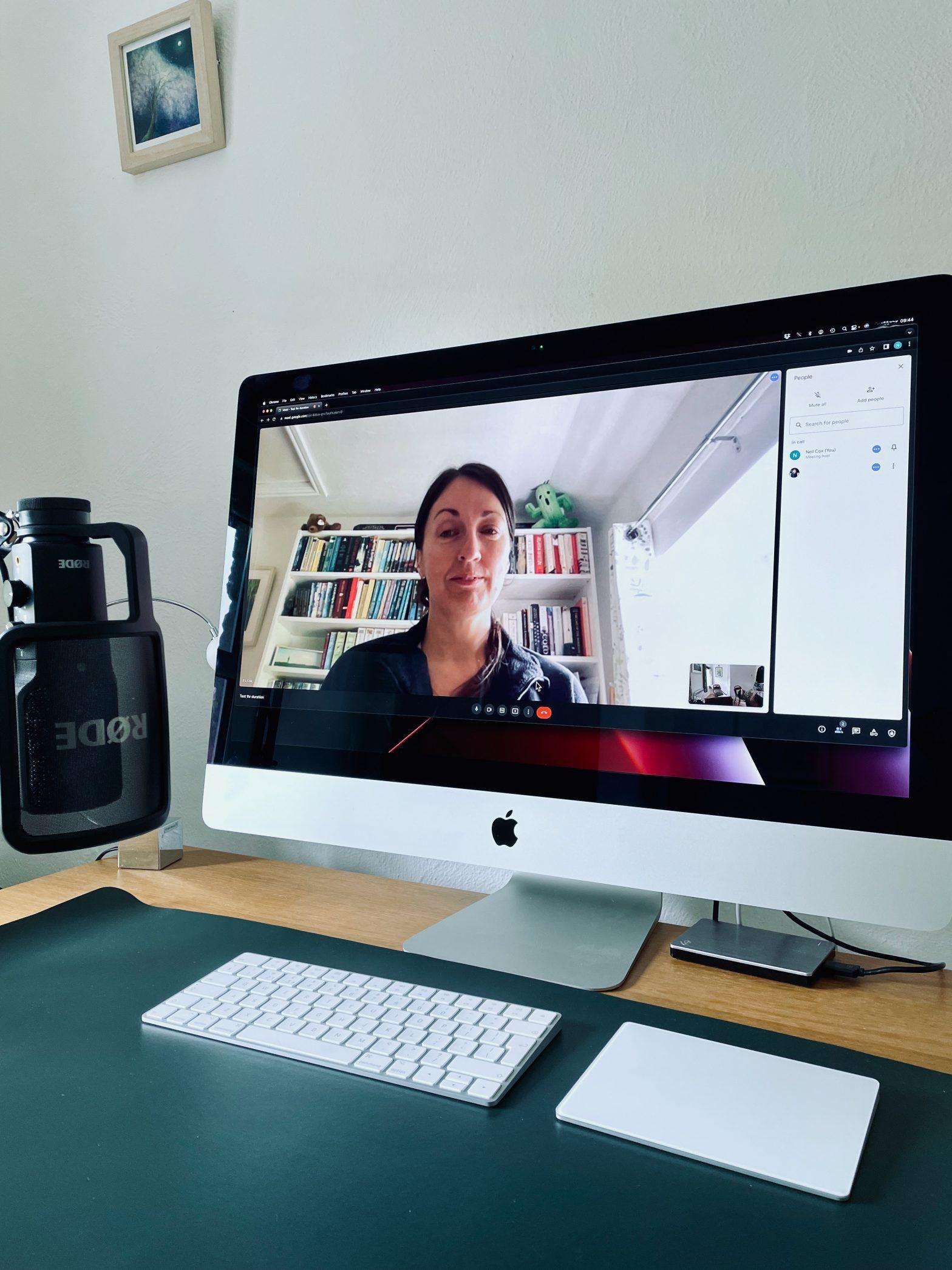
    I am excited to announce that I will be relocating my hypnotherapy practice to Hayle and offering face-to-face sessions in addition to my online therapy services when I’m settled in.

    They weren’t wrong when they said house moving can be one of the most stressful periods of your life!

    ✴︎ new digs

    —08.2023

    I have been in business in Cornwall for almost 10 years, and I have had the pleasure of helping many people overcome a variety of challenges, including anxiety, stress, weight loss, and smoking cessation. I am confident that the move to Hayle will allow me to reach more people and help them achieve their goals.

    Hayle is a growing town with a lot to offer, both in terms of business opportunities and quality of life. I am particularly drawn to the town’s beauty and charm, and I am looking forward to becoming a part of the community.

    I believe that for some people face-to-face therapy can be more effective than online therapy. For example, people who are struggling with social anxiety may find it easier to open up in a face-to-face setting. Additionally, face-to-face sessions can help to build rapport between the therapist and the client, which is important for the success of therapy.

    I am excited about this new chapter in my business, and I look forward to helping more people in Hayle and beyond.

    Why?

    There are a few reasons why I am relocating my business to Hayle. First, I believe that Hayle is a great place to do business. The town is growing, and there is a lot of support for businesses in the area. Second, I am drawn to Hayle’s beauty and charm. The town is located on the coast, and there are many beautiful beaches and natural areas nearby. I am looking forward to being a part of the Hayle community and enjoying all that the town has to offer.

    Room for Change

    recliner therapy chair

    New therapy room chair

    chair hypnotherapy

    View from your chair

    The benefits of offering face-to-face sessions

    I believe that face-to-face therapy can be even more effective than online therapy for some people. Here are a few of the benefits of offering face-to-face sessions:

    Build rapport: Face-to-face sessions can help to build rapport between the therapist and the client. This is important for the success of therapy, as the client needs to feel comfortable and trusting with the therapist.

    Provide a sense of community: Face-to-face sessions can provide the client with a sense of community. This can be especially helpful for people who are struggling with isolation or loneliness.

    Address specific challenges: Face-to-face sessions can be more effective for addressing specific challenges, such as social anxiety or phobias.

  • Time Distortion and Flow State

    Time Distortion and Flow State

    Introduction:

    Welcome to my blog. In this article, I will explore two captivating phenomena—Time Distortion and Flow State—and how they can enhance your personal growth, well-being, and performance. Whether you’re a potential client curious about the possibilities of hypnotherapy or a past client seeking a deeper understanding, I invite you to embark on this journey of self-discovery and transformation.

    Understanding Time Distortion: The Magic of Perception

    Time distortion is an intriguing phenomenon experienced during hypnosis. As our minds enter a deep state of relaxation and heightened suggestibility, time can appear to speed up, slow down, or even become irrelevant. In this section, I will delve into the mechanics of time perception and how it can be harnessed to unlock new possibilities.

    Time is not an absolute construct but rather a subjective experience influenced by various factors. During hypnosis, the mind can enter a state of deep relaxation and heightened receptivity to suggestions, allowing for a unique perception of time. It’s as if the usual constraints of time melt away, and we enter a realm where moments stretch and compress according to our inner experience.

    In this timeless state, you can tap into the power of the present moment. The worries and distractions of the outside world fade away, leaving you fully immersed in the richness of your inner experiences. Time becomes fluid, allowing for a deeper exploration of your thoughts, emotions, and desires. It is within this time-distorted landscape that profound transformations can occur.

    Flow State: The Gateway to Optimal Performance

    Flow state, often referred to as being “in the zone,” is a state of complete immersion, focus, and enjoyment in an activity. It is a pinnacle of human experience where time seems to vanish, and we operate at our highest potential. In this section, I will uncover the transformative power of flow state and its practical applications.

    When you enter a state of flow, you transcend the limitations of time and effortlessly engage with the task at hand. Your attention becomes laser-focused, and actions flow naturally, as if guided by an unseen force. In this state, you experience a merging of action and awareness, where every movement feels instinctual and harmonious.

    flow state, time distortion, Rubik's cube

    Time takes on a different quality in flow state. It can appear to stretch, as hours pass by in what feels like minutes. Alternatively, it can contract, with minutes feeling like hours when you’re fully absorbed in the present moment. This time distortion phenomenon within flow state amplifies the sense of complete immersion and heightens the pleasure derived from the activity.

    Flow state has been observed across various domains, from sports and arts to professional endeavors. Athletes often describe being in a state of flow during peak performance, where their skills are honed to perfection, and they feel a profound connection with their actions. Artists, musicians, and writers also experience flow state when their creativity flows effortlessly, and they become one with their artistic expression.

    The Symbiotic Relationship

    In this section, I bridge the gap between time distortion and flow state, showcasing their profound connection and how they can be synergistically integrated in your hypnotherapy journey.

    The relationship between time distortion and flow state is rooted in the fundamental nature of human consciousness. In both phenomena, time becomes a malleable construct, subject to the power of perception. Time distortion, experienced during hypnosis, can pave the way for entering a state of flow, while flow state deepens the time distortion experience, creating a profound sense of being fully present in the moment.

    During hypnosis, a skilled hypnotherapist will guide you through relaxation techniques and suggestions that open the door to time distortion. As you enter this altered state of consciousness, the boundaries of time expand or contract, allowing for a more profound exploration of your inner world.

    Once time distortion is established, it becomes a fertile ground for accessing flow state. In this harmonious state, your skills, abilities, and focus align perfectly with the challenges presented to you. You become fully absorbed in the present moment, transcending the constraints of time and entering a state of effortless engagement.

    The merging of time distortion and flow state amplifies the transformative potential of your hypnotherapy experience. As you explore the depths of your mind, you tap into your innate creativity, resilience, and personal power. The boundaries that once constrained you begin to dissolve, and you discover new realms of possibility.

    Practical Applications: Embracing Time Distortion and Flow State in Your Life

    Now that I have laid the foundation of understanding, it’s time to explore how time distortion and flow state can be practically applied in various aspects of your life. From personal growth to professional performance, you will discover how these phenomena can elevate your experiences and unlock new realms of possibility.

    1. Personal Development:
      • Managing Stress and Anxiety: Through time distortion techniques, you can create a sanctuary of relaxation and calm, helping you alleviate stress and anxiety.
      • Cultivating Mindfulness: Time distortion can deepen your mindfulness practice, allowing you to fully immerse yourself in the present moment and cultivate a greater sense of self-awareness.
      • Enhancing Self-Exploration: By utilising time distortion and flow state, you can embark on a transformative journey of self-discovery, exploring your beliefs, values, and inner potential.
    2. Performance Enhancement:
      • Athletic Excellence: Flow state can optimise your athletic performance, as you tap into a heightened state of focus, coordination, and physical mastery.
      • Creative Expression: Unlock your artistic potential by entering flow state, where your creativity flows effortlessly, and you connect deeply with your chosen artistic medium.
      • Professional Achievement: By harnessing flow state in your work, you can achieve peak productivity, tap into innovative thinking, and experience a deep sense of fulfillment.

    Embrace Your Potential: Partnering with My Hypnotherapy Practice

    At Neil Cox Hypnotherapy, I am dedicated to helping you unlock your full potential and achieve lasting transformation. As an experienced and compassionate hypnotherapist I am committed to guiding you through the profound journey of time distortion and flow state.

    Through a personalised approach, I tailor each session to your unique needs and goals. My expertise in hypnosis allows us to create a safe and nurturing space for you to explore the depths of your consciousness and access your inner wisdom.

    By combining the power of time distortion and flow state, I help you unlock new realms of possibility, overcome limitations, and embrace your true potential. Whether you seek personal growth, stress relief, enhanced performance, or self-exploration, my hypnotherapy services provide a transformative platform for your journey.

    Conclusion

    In the realms of time distortion and flow state, the boundaries of possibility expand, and new horizons come into view. Through hypnotherapy, you can tap into the power of altered time perception and enter a state of flow where your highest potential is realised.

    Embrace the magic of time distortion and flow state, and embark on a journey of self-discovery, personal growth, and transformative change. Allow me to guide you on this path, as I unlock the doors to your inner potential and help you unleash the extraordinary power that lies within you.