
You can be completely certain that you want to change something and still find yourself doing it again.
Perhaps you reach for the vape without noticing, pour a drink because the working day has finished or wander into the kitchen when you aren’t particularly hungry.
Afterwards, you may wonder why you did it when you had already decided that you wouldn’t.
That doesn’t necessarily mean you lack willpower or weren’t serious about changing. Habits become connected with particular times, places, feelings and routines. When the familiar moment arrives, the old response can happen before you have given it much thought.
This is where our work begins: with what the habit is like for you and what you want to do differently.
How does the habit fit into your day?
A habit rarely exists in isolation.
You may smoke with your morning coffee, vape whenever you pause between jobs or associate a drink with finally being able to relax. Snacking might happen while watching television, after a difficult day or whenever you feel bored.
Some habits are connected with stress. Others have simply been repeated so often that they have become part of the furniture.
During the initial consultation, I’ll ask when it happens, what tends to come just before it and what you feel you get from it.
You can also tell me what you enjoy about the habit or what you are worried about losing. There is no benefit in pretending you hate every part of something if that isn’t true.
Understanding its place in your life helps us plan for the moments when changing it is most likely to feel difficult.
“I’ve tried before”
A previous attempt is useful information.
Perhaps you managed well for several weeks and then returned to the habit during a stressful period. You may have tried to change too many things at once or relied on avoiding every situation connected with it.
We can look at what helped, where things became difficult and what might need more preparation this time.
Returning to a habit doesn’t erase the period when you changed it. It tells us something about the situations that still need attention.
How hypnotherapy may help
Hypnotherapy may be used to support a change you have already decided to make.
Alongside our conversation, I may use hypnosis, imagery and mental rehearsal based on the routines we have discussed.
That might involve imagining your morning coffee without a cigarette, taking a work break without reaching for a vape or finishing the day without automatically pouring a drink.
We can also rehearse unexpected moments: somebody offering you something, a stressful day or the thought that having just one will not matter.
You remain aware and in control throughout hypnosis. You can speak, move or stop whenever you wish.
There is nothing you need to perform or get right. The session is shaped around your reasons, your routines and the situations that matter to you.
The change still belongs to you
Hypnotherapy doesn’t make your decisions for you.
Your motivation, preparation and the choices you make afterwards remain important. I won’t tell you that hypnosis removes the need for effort or promise that every urge will disappear.
What it can offer is focused support for the decision you have made and an opportunity to rehearse responding differently when familiar situations arise.
We’ll also talk about what happens after the appointment. The ordinary day waiting for you matters just as much as the time spent in the therapy room.
Why can sticking to things be so difficult?
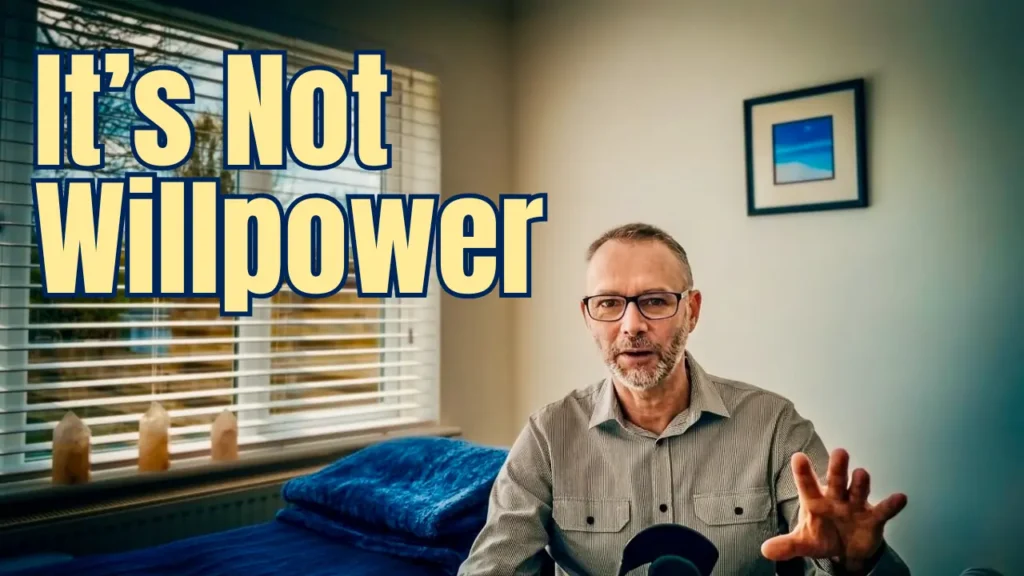
I’ve made a video about the gap between deciding to change and following that decision through when the familiar moment arrives.
It looks at why good intentions can feel much less convincing when you are tired, stressed or back in your usual routine.
Stop smoking
Smoking may have been part of your life for years, but that doesn’t mean it has to be part of what comes next.
I offer a dedicated stop-smoking programme for adults who have made their own decision to stop. It begins with an initial consultation, followed by the main stop-smoking appointment around a week later.
Read about my stop-smoking programme
Stop vaping
Vaping can gradually find its way into almost every part of the day because there isn’t always a clear beginning or end.
If you have decided to stop, we can look at your nicotine use, the moments when you reach for the vape and how you want to handle them.
Read about my stop-vaping programme
Alcohol and drinking patterns
Some people want to change a non-dependent drinking habit, such as drinking less often or becoming more deliberate about when they drink.
My sessions are only suitable where there is no physical dependence on alcohol. Withdrawal can be dangerous and needs appropriate medical or specialist support.
Read about alcohol and drinking patterns
Eating habits
You may already have a sensible plan around food but find that stress, tiredness, cravings or old routines make it difficult to follow.
Hypnotherapy may help with food-related habits and motivation as one part of a wider approach to weight management.
Read about eating habits and weight management
Other unwanted habits
Not every habit fits neatly into one of those categories.
You may be concerned about a repetitive behaviour connected with stress or boredom, or something you do almost automatically without knowing what purpose it still serves.
Send me a brief outline before booking. I’ll tell you whether it falls within the kind of work I offer and whether another professional should be involved.
When medical or specialist support is needed
Some habits involve physical dependence or are connected with a medical or mental-health condition.
Alcohol dependence and substance misuse need appropriate medical or specialist services. Eating disorders require specialist assessment and treatment. If stopping or reducing something causes withdrawal symptoms, please seek medical advice before making changes.
A GP, pharmacist or NHS service can sometimes provide practical support alongside hypnotherapy.
I’ll be straightforward if I believe another source of help should come first.
Thinking about making a change?
You don’t need to contact me with a perfect plan.
Tell me what you want to change, how it currently fits into your day and anything you have already tried. We can discuss whether hypnotherapy seems suitable and what preparation would be helpful.
Appointments are available at my practice in Hayle, Cornwall. Online appointments are available for suitable habit-related work, although the main smoking and vaping appointments take place in person.
Contact me about changing a habit